笑看风云
神十八“太空出差三人组”是如何选拔的?听一听总设计师的详细阐述_我的网站

一 |
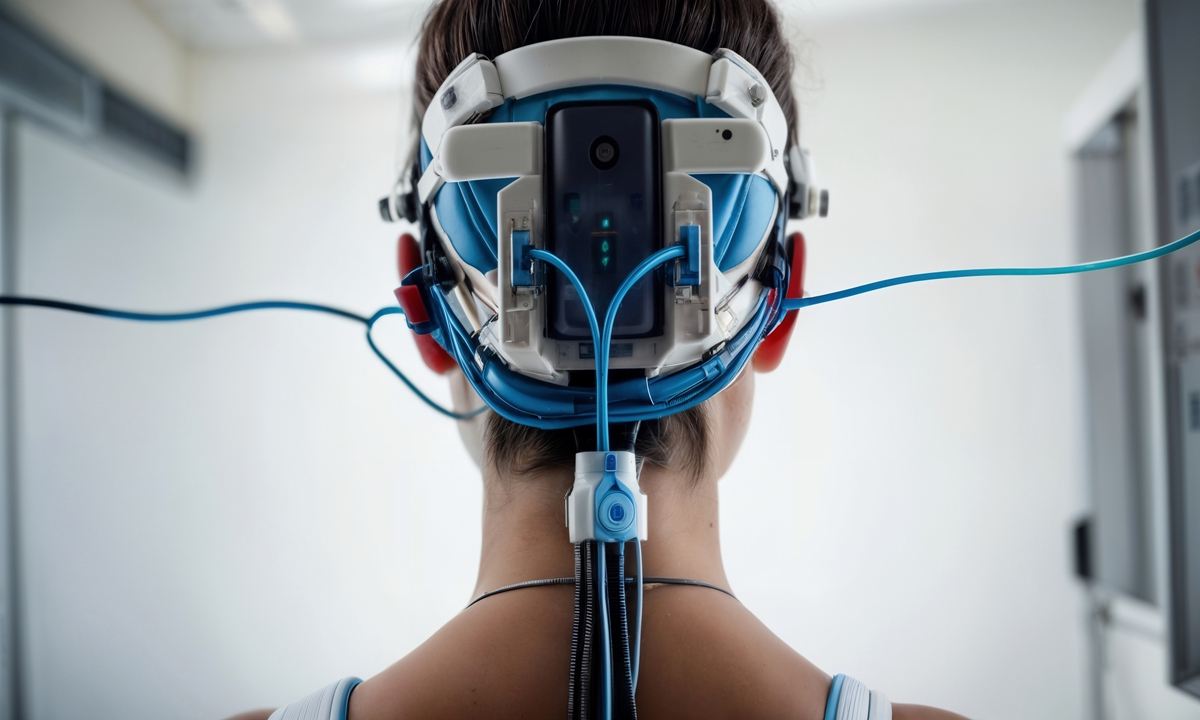
Photo: VCG
Chinese researchers have developed a multifunctional electrode coating that addresses key challenges in long-term brain-computer interface (BCI) implantation, including signal loss and tissue adhesion, bringing BCI one step closer to clinical application, the Global Times learned from the research team behind the findings on Sunday.
As an emerging field combining neuroscience and artificial intelligence (AI), BCI faces a major challenge of ensuring long-term compatibility between electrodes and brain tissue. Previous clinical trials showed that immune responses could cause implanted electrodes to retract after just three months, severely reducing signal quality and the number of available channels.
This problem stems from chronic inflammation triggered by implants, which creates insulating scar tissue around electrodes and separates them from neurons. Irreversible adhesion between electrodes and brain tissue after long-term implantation also makes device removal risky, potentially causing brain injury during follow-up surgeries.
Experiments showed that flexible neural electrodes coated with this material could operate stably in the brain for more than 300 days and could be safely removed without causing damage. This means the universal coating technology can make electrodes not only operate stably over the long term but can also be safely removed and replaced after aging, paving the way for long-term BCI applications.
Developed by the research team led by Zhang Wei at the Technical Institute of Physics and Chemistry, Chinese Academy of Sciences, associated with Beijing Tiantan Hospital, Shanghai Institute of Microsystem and Information Technology and NeuroXess, a high-tech life science company specializing in BCI technologies, the cationic alternating peptide electrode coating preserves electrode flexibility and conductivity, while offering antibacterial, anti-protein adsorption and immune-rejection-inhibiting functions.
A 300-day animal study showed the coating's effectiveness. Bare electrodes experienced a sharp loss of recording capability after 90 days of implantation and could barely detect neuronal signals after 300 days. In contrast, coated electrodes maintained stable recording channels and consistently captured neural signals above 155 microvolts.
In terms of neural modulation, after 300 days of implantation, conventional electrodes required a current of 100 microamps to induce weak limb responses, while coated electrodes triggered clear movements with only 2 microamps, improving modulation efficiency by 50 times.
Notably, the removal tests highlighted a key advantage of the coating that electrodes no longer form irreversible bonds with brain tissue. In the experiments, the coated electrodes were removed intact, with minimal damage to the surrounding brain tissue, Zhang told the Global Times on Sunday.
。

二 | 央视网消息:4月24日,神舟十八号航天员乘组叶光富、李聪、李广苏在酒泉卫星发射中心问天阁与中外媒体记者见面。那么,这一次的“太空出差三人组”是如何选拔出来的呢?据中国载人航天工程航天员系统总设计师黄伟芬介绍,神舟十八号乘组的选拔遵循统筹规划、以老带新、新老搭配的基本原则进行。此外,在选拔时还深入全面分析了本次任务的特点,以及任务对航天员身心素质、知识储备和技能等方面的要求。 黄伟芬称:“我们根据这个任务的特点来确定需要选什么样的航天员。对于神十八任务来讲,因为还是有出舱活动的任务,这个出舱活动的任务对航天员的要求还是很高的。

三 | ” 目前任务期已接近尾声的神舟十七号乘组进行了两次出舱任务,他们的主要工作围绕空间站的维护和维修展开,而神舟十八号出舱的主要任务是空间站的防护。

四 | 黄伟芬介绍,随着空间站在轨运行时间的推移,难免会遇到一些新的问题和情况,因此,航天员的任务会有更多的动态调整。 黄伟芬介绍:“在神十七乘组飞行前,那个时候我们规划的出舱活动的任务和他们飞行中实际实施的出舱活动任务是有所调整的,这是一个常态,未来它也是一个常态。我们每次出舱有计划内的出舱,也有可能计划外的临时的新增的出舱活动的任务,所以我们每次任务都是不一样的。” 针对未来已知和未知的任务,黄伟芬说,神舟十八号乘组的选定正是考虑到这样的新特点。 黄伟芬表示,神舟十八号乘组是首个“80后”航天员组成的一个乘组,我们叫“80后”乘组,三名男性的航天驾驶员年富力强,很有朝气。他们经过乘组的训练,目前配合非常默契,身心状态各方面都非常好,具备了执行任务的能力。 此外,黄伟芬还介绍,目前我国航天员乘组的选拔策略并不是局限于一次任务选拔一个乘组,而是有长远的统筹性安排。 黄伟芬称:“所以我们在选拔的时候,不仅要看神舟十八号飞行任务对航天员的要求,我们还得看后续的任务,所以我们要统筹规划、统筹安排,考虑他们和任务的匹配性、他们彼此之间的相容性,但是我们也要统筹规划合理的布局。进入应用发展阶段之后,我们一次是选两个乘组,这是我们在应用与发展阶段的一个选拔策略,这和我们在空间站的建设期一次选出4个乘组的策略是有所调整的。
Current article:http://www.senchuoshaozaodidia.shop/list_081c/sct.doc
Published on:16:12:58


