
- 作者:辛公杜
- 来源:封神榜
- 发布时间:2026-08-26
模范秘书
Former businessman Christopher Luxon wins New Zealand election as voters seek conservative change_我的网站

A |
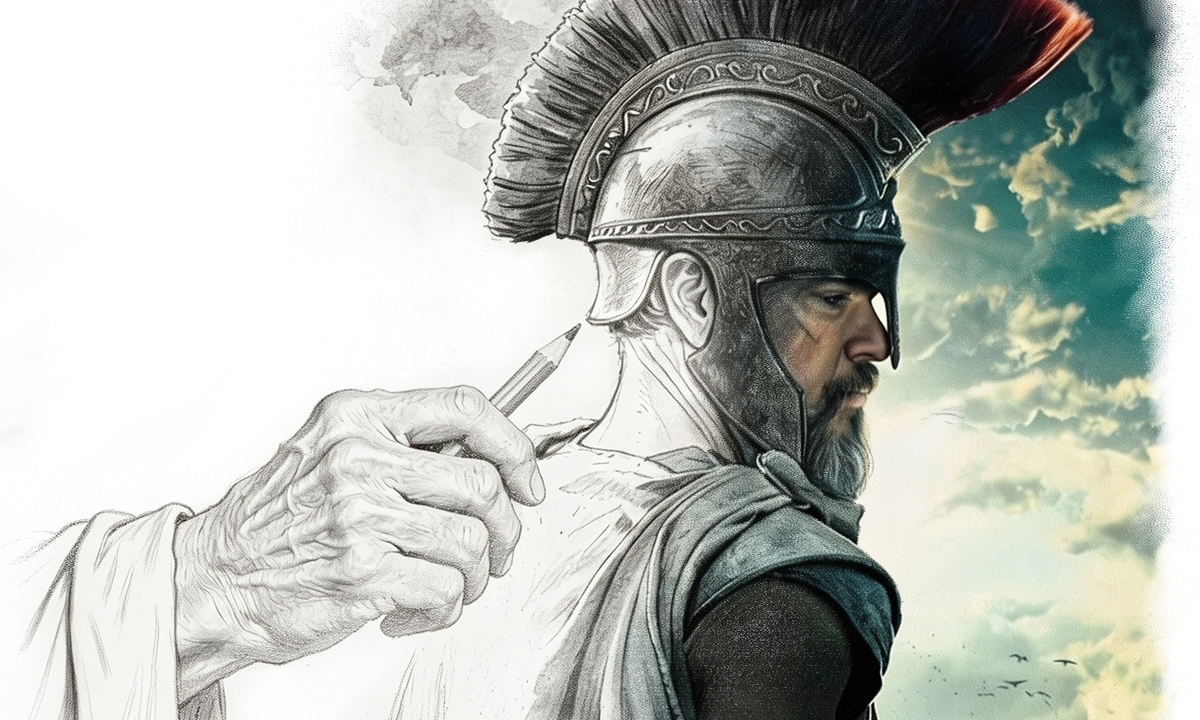
We shall first consider some of the positive and negative appraisals of the film, before turning to its significance for Chinese viewers and, more broadly, to possible comparisons between the philosophical and cultural traditions of East and West. This commentary draws primarily on reviews by Emily Wilson in the London Review of Books and in The Atlantic, and Daniel Mendelsohn in the New York Review of Books, as well as on questions raised by Zhong Shu.
It should first be acknowledged that Nolan has produced an impressive action movie, condensing and abridging most of the major episodes of Odysseus' adventurous journey back to Ithaca. Avoiding digital technology based on artificial screens, he gives the story an unusually tangible quality.
The film also benefits from a distinguished cast, whose performances illuminate the different strands of the narrative as conceived by the director. At the same time, the viewer is invited to reconstruct the complex temporal layers of the epic, extending from the fall of Troy to Odysseus' homecoming (nostos), his reunion with Telemachus and Penelope, and the harsh punishment of the suitors.
Many objections concerning anachronisms in costumes and armor, the use of American English, details of the Mycenaean or Archaic periods, or the casting of particular characters seem unfair. Some degree of anachronism is inevitable, and the pursuit of historical or textual fidelity would ultimately be futile. Nolan was obliged to omit or substantially rework parts of the original narrative in order to fit it into a three-hour film. Some omissions are nevertheless regrettable -- notably the treatment of the Cyclops episode and Odysseus' descent into the Underworld, as well as the complete omission of the Phaeacian episode and his encounter with Nausicaa.
There are, however, more serious grounds for concern with regard to the central idea underlying Nolan's reinterpretation of the Odyssey. In his attempt to convey a modern moral message largely alien to Homer's world, Nolan presents an Odysseus who has surprisingly little in common with the "complicated" (polytropos) man depicted by the ancient poet. The ethical ambiguities of a shrewd and resourceful character, ready to deceive and to commit violence in pursuit of his ends, are largely absent from Matt Damon's Odysseus. Instead, we encounter a hero repeatedly tormented by guilt for atrocities perpetrated or condoned during the Trojan War and consequently seeking some form of atonement.
Zhong Shu is therefore justified in asking Nolan whether he intends to "Christianize" Odysseus. The filmmaker seems to have moved him, almost imperceptibly, from what anthropologists have described as a "shame culture" -- the world of Homer, in which honor and fame, as perceived by others, are of central importance -- to a "guilt culture," characterized by an internalized sense of responsibility and remorse for wrongdoing. This latter moral orientation emerges with classical Greek ethics, particularly with Socrates and Plato, and reaches its fullest expression in Christian and post-Christian conceptions of morality.
Nolan appears to believe that such a transition toward guilt follows naturally once we recognize the force of a commitment to "Zeus' law," particularly in the obligations of mutual hospitality (xenia). He connects these obligations with a version of the "Golden Rule," understood as a principle of reciprocal respect in our treatment of others.
This, however, is problematic as a construal of Homeric morals. Early variants of the Golden Rule can be found from the fifth century BC onwards in Democritus and Isocrates, and later in Epictetus and, of course, in the teachings of Jesus. More importantly, the moral conscience Nolan attributes to Odysseus not only "Christianizes" him; it arguably "Kantianizes" him as well. "Zeus' law" is presented almost as a universal proto-categorical imperative, something that could readily be endorsed by Kant. This differs significantly from the ancient injunction against hybris: the warning against excessive pride, the transgression of human limits, and the violation of the divine and cosmological order that we encounter throughout Homer's epics.
One may, of course, concede to Nolan the artistic right to create his own Odysseus: a depressed war veteran, conscious of the dangers of violating moral rules, and concerned with preserving the normative foundations of civilization. The difficulty lies elsewhere. Nolan's attempt to accommodate this new hero and his moral psychology within the narrative framework of the original Odyssey is not entirely successful. The result is a tension between the Homeric story the film seeks to reconstruct and the modern moral drama superimposed upon it. This tension, I believe, accounts for much of the film's weakness.
When we turn, however, to the horizon of the Chinese tradition, a more intriguing possibility emerges. The moral dimension of Nolan's Odysseus may be closer to certain aspects of Confucian thought than to the Homeric model. Confucian relational role ethics can be interpreted as encouraging a form of moral self-consciousness in which responsibility, integrity, and the cultivation of the self become increasingly internalized. In this qualified sense, one might speak of a movement from "shame" towards something resembling a "guilt" culture.
The Golden Rule is also prominent in Confucian teaching. Furthermore, the demand to examine and rectify one's conduct in accordance with yi (righteousness), while cultivating ren (benevolence or humaneness), can be understood as pointing toward a more inward and spiritual form of the Greek nostos: a return not simply to one's geographical home, but to one's moral center, situated within a network of relationships.
In addition, Nolan's relative downplaying of divine intervention, and his tendency to integrate the divine dimension into a more naturalistic moral order, may make his construal more congenial to the practical ethos of Chinese philosophy than to a worldview grounded explicitly in metaphysical theology.
There is, therefore, a certain paradox. Although Nolan's film may be criticized as an interpretation of Homer, its very misreading of the epic may enable it to contribute to a dialogue between East and West. By transforming Odysseus into a figure whose moral conscience combines Christian, Kantian, and perhaps unexpectedly Confucian elements, Nolan brings into contact traditions that otherwise belong to very different intellectual worlds. His Odyssey is not true to Homer's spirit. But precisely for this reason, it raises questions about how different civilizations understand responsibility, moral identity, the relation between the individual and the community, and, ultimately, the meaning of returning home.
The author is a Professor Emeritus of Philosophy with the National and Kapodistrian University of Athens and Secretary of the Center of Greek and Chinese Civilizations. [email protected]
。 AUCKLAND, New Zealand -- Conservative former businessman Christopher Luxon will be New Zealand’s next prime minister after winning a decisive election victory Saturday.People voted for change after six years of a liberal government led for most of that time by Jacinda Ardern.The exact makeup of Luxon’s government is still to be determined as ballots continued to be counted.Luxon arrived to rapturous applause at an event in Auckland. He was joined on stage by his wife, Amanda, and their children, William and Olivia. He said he was humbled by the victory and couldn't wait to get stuck in to his new job. He thanked people from across the country.“You have reached for hope and you have voted for change,” he said.Supporters chanted his campaign slogan which promised to get the country “back on track.” Outgoing Prime Minister Chris Hipkins, who spent just nine months in the top job after taking over from Ardern in January, told supporters late Saturday he had called Luxon to concede.Hipkins said it wasn’t the result he wanted.“But I want you to be proud of what we achieved over the last six years,” he told supporters at an event in Wellington.Ardern unexpectedly stepped down as prime minister in January, saying she no longer had “enough in the tank” to do the job justice. She won the last election in a landslide, but her popularity waned as people got tired of COVID-19 restrictions and inflation threatened the economy.Her departure left Hipkins, 45, to take over as leader. He had previously served as education minister and led the response to the coronavirus pandemic. With most of the vote counted, Luxon’s National Party had about 40% of the vote. Under New Zealand’s proportional voting system, Luxon, 53, is expected to form an alliance with the libertarian ACT Party. Meanwhile, the Labour Party that Hipkins leads was getting only a little over 25% of the vote — about half the proportion it got in the last election under Ardern.And in a result that would be particularly stinging for Labour should it lose the seat, National was in a tight race for Ardern’s old electorate seat, Mount Albert. The seat has long been a Labour stronghold and was also held by another former Labour prime minister, Helen Clark. The National Party candidate for the seat, Melissa Lee, told The Associated Press she was feeling excited but also nervous about the final result in Mount Albert.“It’s been Labour since 1946. It has been the biggest, safest Labour seat forever,” she said. “It would be fantastic if we won it.” Lee said that when she was door-knocking, people had told her they were tired of the current government and were concerned with the state of the economy and the spiraling cost of living. David Farrar, a longtime conservative pollster, said there was still a good chance that Labour would end up holding the seat once all the votes were counted. However, he said, his initial impression of voting throughout the country was that it was turning out to be a “bloodbath” for the left. Luxon has promised tax cuts for middle-income earners and a crackdown on crime. Hipkins had promised free dental care for people younger than 30 and the removal of sales taxes on fruit and vegetables.Also at stake in the election is the government’s relationship with Indigenous Māori. Luxon has promised to axe the Māori Health Authority, which he says creates two separate health systems. Hipkins says he’s proud of such co-governance efforts and has accused Luxon of condoning racism.Within days of taking the reins in January, Hipkins found himself dealing with a crisis after deadly floods and then a cyclone hit New Zealand. He quickly jettisoned some of Ardern’s more contentious policies and promised a “back to basics” approach focused on tackling the spiraling cost of living. Warm spring weather in the largest city, Auckland, seemed to encourage voters, with queues forming outside some polling places. Early voting before Election Day was lower than in recent elections.During a six-week election campaign, both Hipkins and Luxon traveled the country and hammed it up for the cameras. Earlier in the week, Luxon, who served as chief executive of both Unilever Canada and Air New Zealand, told an energized crowd in Wellington that he would crack down on gangs.“I’ve gotta tell you, crime is out of control in this country,” Luxon said. “And we are going to restore law and order, and we are going to restore personal responsibility.”Luxon also got cheers when he promised to fix the capital’s gridlocked traffic with a new tunnel project.Luxon is relatively new to politics but held his own against the more experienced Hipkins during televised debates, according to political observers. But Luxon also made some gaffes, such as when he was asked in a 1News debate how much he spent each week on food.His answer of “about sixty bucks” (U.S. $36) was ridiculed on social media as showing he was out of touch with the cost of living. ___Follow AP’s Asia-Pacific coverage at https://apnews.com/hub/asia-pacific。
Current article:http://www.senchuoshaozaodidia.shop/list_us1a/0p2.html
Published on:13:06:39
- 本文标签:
- 8090