说出你的故事

Ecuadorians electing new president, choosing between an heir to a banana empire and an attorney_我的网站

年代秀

一 |     CARACAS, Venezuela -- Frightened by unprecedented violence on the streets and within prisons, Ecuadorians have a universal demand for the president they will choose Sunday — safety.The runoff election in the South American country pits an heir to a banana empire, Daniel Noboa, and an attorney, Luisa González. Both have limited governing experience and will undoubtedly have their work cut out.The election comes as more Ecuadorians become victims of drug-related violence that erupted roughly three years ago and intensified in August, when a presidential candidate was assassinated in broad daylight. People continuously watch their backs and limit how often they leave home. The uneasiness even pushed Noboa to add a bulletproof vest to his daily outfit.Whoever wins with a simple majority of votes will govern for only 15 months, until May 2025, which is what remains of the presidency of Guillermo Lasso. He cut his term short when he dissolved the country’s National Assembly in May as lawmakers carried out impeachment proceedings against him over alleged improprieties in a contract by a state-owned company.Lasso, a conservative former banker, clashed constantly with lawmakers after his election in 2021 and decided not to run in the special election. Under Lasso's watch, violent deaths soared, reaching 4,600 in 2022, the country’s highest in history and double the total in 2021. The National Police tallied 3,568 violent deaths in the first half of 2023.“Security affects us all, and whether poor or rich, no one is safe from criminals anymore,” housewife Ximena Flores said ahead of the runoff election. “Do you think that a new president will be able to do something in such a short time? I think not. It will be a new disappointment for everyone.”The spike in violence is tied to cocaine trafficking. Mexican, Colombian and Balkan cartels have set roots in Ecuador and operate with assistance from local criminal gangs.Voting is mandatory in Ecuador for people ages 18 through 64. Those who don’t comply face a fine of about $45. Polls were to close in late afternoon, and results were expected Sunday evening.Noboa and González, both of whom have served short stints as lawmakers, advanced to the runoff by finishing ahead of six other candidates in the election’s first round Aug. 22.Noboa, 35, is an heir to a fortune built on Ecuador’s main crop, bananas. His political career began in 2021, when he won a seat in the National Assembly and chaired its Economic Development Commission. He opened an event organizing company when he was 18 and then joined his father’s Noboa Corp., where he held management positions in the shipping, logistics and commercial areas.González, 45, held various government jobs during the decade-long presidency of Rafael Correa, her mentor, and was a lawmaker until May. She was unknown to most voters until Correa’s party picked her as its presidential candidate. At the start of the campaign, she said Correa would be her adviser, but she has recently tried to distance herself a bit in an effort to court voters who oppose the former president.___Associated Press writer Gonzalo Solano in Quito, Ecuador, contributed to this report.。    
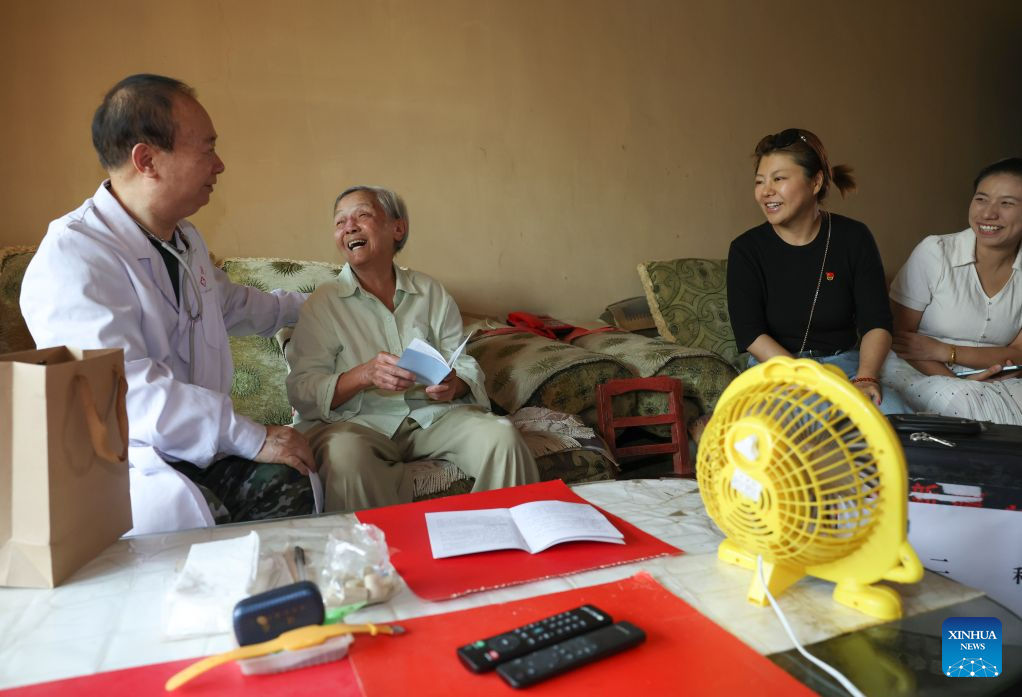
Zhuang Shihua (1st L) visits a patient (2nd L) for free clinic service in Urumqi, northwest China's Xinjiang Uygur Autonomous Region, July 27, 2026.

Zhuang Shihua, a veteran hepatobiliary surgeon and former president of the hospital affiliated to the Xinjiang Armed Police Corps, has been in the country's far west for over five decades.

His team has successfully completed more than 140,000 minimally invasive hepatobiliary surgeries, and made seven breakthroughs that filled the domestic gap in the field. Apart from clinical practice, Zhuang has cultivated a large number of key personnel, and supported grassroots medical workers who have stood firm on the front lines of public health.

Zhuang's medical expertise brought him many opportunities to make a fortune, but he turned down the offers and stayed in Xinjiang.

Zhuang often visited patients in the pastoral areas of Tianshan Mountains. He also provided financial assistance to over 70 underprivileged students and helped more than 690 households with patients out of poverty. (Xinhua/Wang Fei)
    Zhuang Shihua (1st L) visits a patient (2nd L) for free clinic service in Urumqi, northwest China's Xinjiang Uygur Autonomous Region, July 27, 2026. Zhuang Shihua, a veteran hepatobiliary surgeon and former president of the hospital affiliated to the Xinjiang Armed Police Corps, has been in the country's far west for over five decades. His team has successfully completed more than 140,000 minimally invasive hepatobiliary surgeries, and made seven breakthroughs that filled the domestic gap in the field. Apart from clinical practice, Zhuang has cultivated a large number of key personnel, and supported grassroots medical workers who have stood firm on the front lines of public health. Zhuang's medical expertise brought him many opportunities to make a fortune, but he turned down the offers and stayed in Xinjiang. Zhuang often visited patients in the pastoral areas of Tianshan Mountains. He also provided financial assistance to over 70 underprivileged students and helped more than 690 households with patients out of poverty. (Xinhua/Wang Fei)
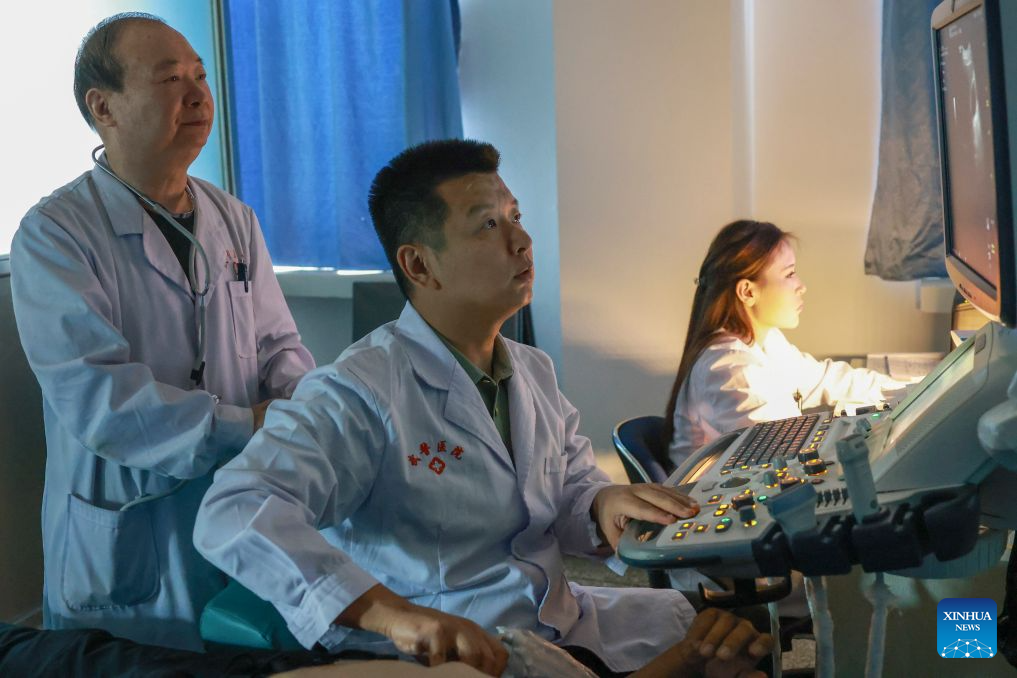
Zhuang Shihua (L) checks the ultrasound scan of a patient before a surgery at the hospital affiliated to the Xinjiang Armed Police Corps in Urumqi, northwest China's Xinjiang Uygur Autonomous Region, Aug. 18, 2026. (Xinhua/Wang Fei)
    Zhuang Shihua (L) checks the ultrasound scan of a patient before a surgery at the hospital affiliated to the Xinjiang Armed Police Corps in Urumqi, northwest China's Xinjiang Uygur Autonomous Region, Aug. 18, 2026. (Xinhua/Wang Fei)
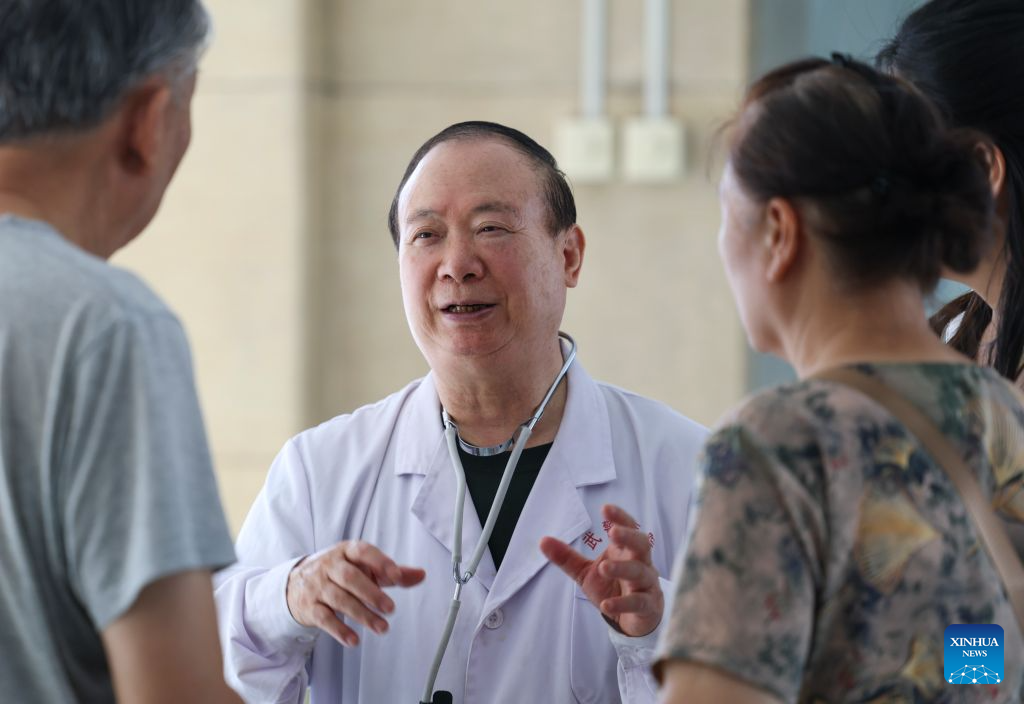
Zhuang Shihua talks with a patient and his family at the hospital affiliated to the Xinjiang Armed Police Corps in Urumqi, northwest China's Xinjiang Uygur Autonomous Region, Aug. 18, 2026. (Xinhua/Wang Fei)
    Zhuang Shihua talks with a patient and his family at the hospital affiliated to the Xinjiang Armed Police Corps in Urumqi, northwest China's Xinjiang Uygur Autonomous Region, Aug. 18, 2026. (Xinhua/Wang Fei)
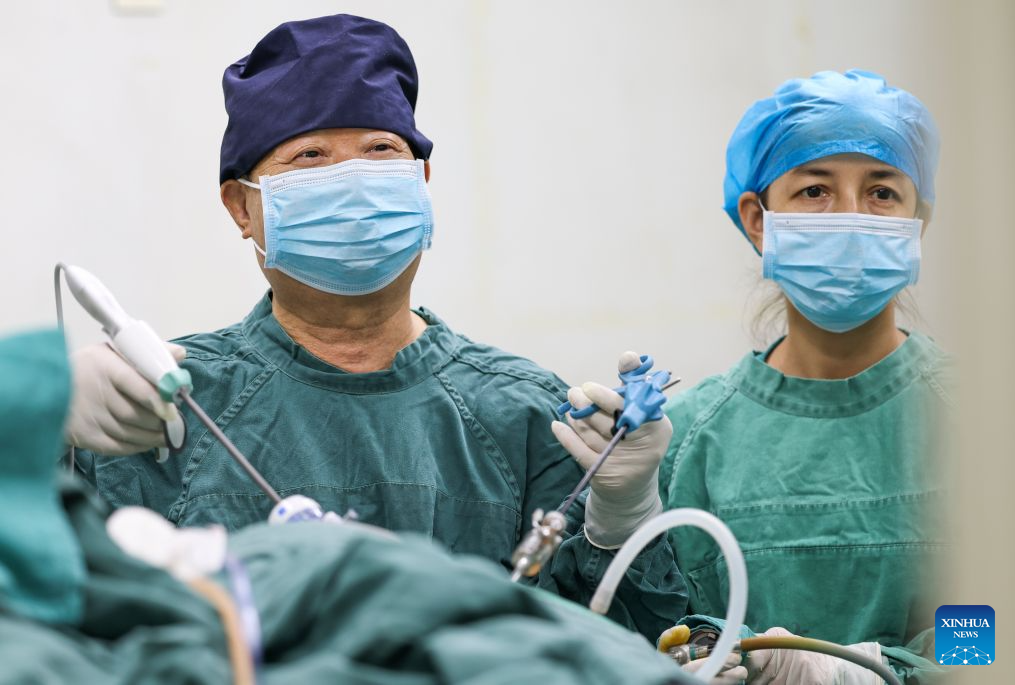
Zhuang Shihua (L) performs a surgery at the hospital affiliated to the Xinjiang Armed Police Corps in Urumqi, northwest China's Xinjiang Uygur Autonomous Region, Aug. 18, 2026. (Xinhua/Wang Fei)
    Zhuang Shihua (L) performs a surgery at the hospital affiliated to the Xinjiang Armed Police Corps in Urumqi, northwest China's Xinjiang Uygur Autonomous Region, Aug. 18, 2026. (Xinhua/Wang Fei)

Current article:http://www.senchuoshaozaodidia.shop/news/20260826_3942665.html

Published on:00:36:38