
李连杰
宁波发布台风“梅花”紧急警报 将正面袭击 部分列车停运客船停航_灾害_山洪_我的网站

一 |
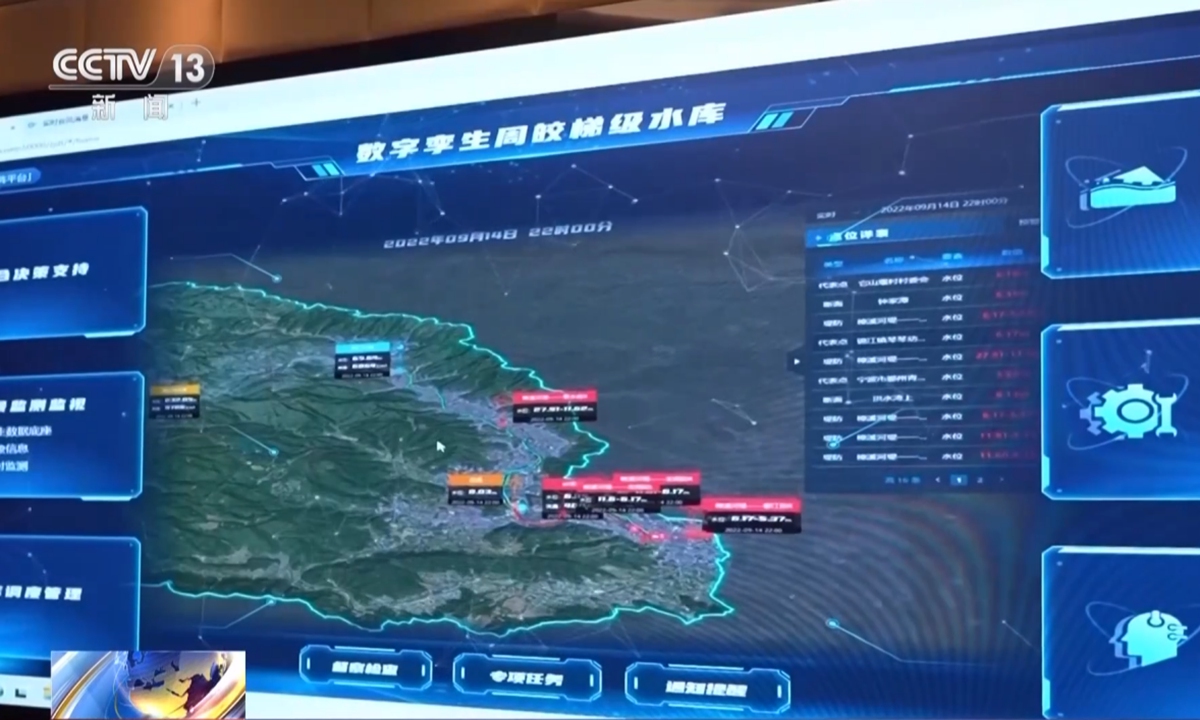
From AI-powered flood forecasting and digital twins to smart reservoir management, phased-array radar networks and ground-based remote sensing systems, a new generation of high-tech equipment and systems is helping Chinese cities sharpen weather forecasts, improve flood control and make faster, more precise decisions to stay one step ahead of extreme weather.
In Ningbo, East China's Zhejiang Province, where water resources are relatively limited, the calculation of reservoir water release is tricky. If you release too much, the city could find itself short of water after the storm, however if you release too little, the reservoir may struggle to accommodate the floodwater brought by torrential rain.
Finding that balance is now increasingly a job for AI.
"The balance point has to be continuously analyzed and calculated by the dispatching software," Jiang Yutian, a department director at the Ningbo Water Conservancy & Hydropower Planning and Design Institute Co., Ltd., said, according to CCTV News.
At the heart of the system is an AI forecasting model that dramatically speeds up calculations.
For the Yongjiang River basin, running a complete flood-control scenario used to take five to 10 minutes. The new model can complete the calculation in just five to 10 seconds, cutting the time required to around one-sixtieth of the previous level.
Using rainfall forecasts and changing water levels, the model refreshes its recommendations every five minutes, calculating how much water should be released, how much can be stored later and how much reservoir capacity will remain when the flood peak arrives. Dispatchers can then adjust water releases in real time, per CCTV's report.
AI is not working alone. A digital-twin dispatching platform allows reservoirs to be managed together rather than individually. Across Ningbo's 16 major medium- and large-sized flood-control reservoirs, operators can see in real time which are approaching capacity and which still have room to take more water.
Hundreds of kilometers inland, another city is using a different technological set of technologies to tackle the same challenge of weather uncertainty.
Nanyang in Central China's Henan Province, which lies in a basin surrounded by mountains on three sides, has experienced widespread heavy rainfall since Monday under the influence of Typhoon Dolphin. Its geography leaves the city exposed to a combination of risks, including urban waterlogging, flooding in small and medium-sized rivers and inundation of farmland.
To track storms more precisely, the Nanyang meteorological authority has deployed a network of four newly installed X-band dual-polarization phased-array radars, together with an S-band dual-polarization radar and a ground-based vertical remote sensing system, according to the China Meteorological Administration.
The equipment allows forecasters to closely track the development and movement of convective clouds and identify areas at risk of intense rainfall earlier.
The city's meteorological authority has also integrated weather data with a citywide video monitoring network covering vulnerable locations such as underpasses, tunnels, river embankments and mountainous villages. This allows forecasters to compare what instruments are detecting with what is actually happening on the ground.
Together, the approaches in Ningbo and Nanyang offer a glimpse of how China's weather-disaster prevention efforts are becoming increasingly digital and intelligent, using faster calculations, denser observations and real-time data to bring greater certainty to decisions made in the face of uncertain weather.
Global Times
。

二 |

三 | 台风“梅花”未来路径预报图(央广网发 中央气象台截图)从最新气象资料分析,“梅花”将以台风级或强台风级的强度正面袭击宁波市,对该市产生严重风雨影响。另据浙江省水利厅、浙江省气象局7时35分联合发布的山洪灾害红色预警:预计9月13日8时至14日8时,海曙区、奉化区、余姚市、上虞区、嵊州市发生山洪灾害可能性很大(红色预警),北仑区、鄞州区、新昌县、定海区、岱山县发生山洪灾害可能性大(橙色预警),余杭区、临安区、象山县、宁海县、德清县、安吉县、普陀区发生山洪灾害可能性较大(黄色预警),西湖区、萧山区、富阳区、桐庐县、柯桥区、诸暨市、磐安县、东阳市、永康市、黄岩区、三门县、天台县、仙居县、温岭市、临海市、缙云县可能发生山洪灾害(蓝色预警)。请密切关注天气形势及雨水情变化,注意防范强降水引发的山洪灾害。
四 | 为应对台风“梅花”,根据台风变化动态,铁路宁波站部分列车停运:9月13日、14日宁波一平顶山k1438次停运。

五 | 9月14日、15日宁波一毫州k8512次停运。9月15日宁波一兰州k1040次停运。9月14日宁波一洛阳k166次停运。9月15日宁波一长春k336次停运。9月14日、15日宁波一济南T136次停运。9月15日宁波一郑州T326次停运。9月14日宁波一昆明Z290次停运。9月14日、15日宁波一武昌Z32次停运。铁路部门提醒旅客,已购买停运列车车票的旅客,请不要急于前往车站窗口办理退票业务,可于票面乘车日期起30日内(含当日)在互联网办理退票,或持购票时所使用的有效身份证件原件到车站专窗退票( 已打印报销凭证的请将凭证交予车站窗口工作人员),以上均不收取手续费.停运列车车次及时间等相关信息,请以车站公告为准,若有疑问可致电铁路客服热线021-12306咨询。旅客还可关注铁路12306客服网站公告,以及长三角铁路官方微博、微信信息,以便合理安排行程。铁路部门也将密切关注台风路径变化,根据风速雨量和灾害影响程度等实际,动态调整列车开行方案,尽力服务旅客安全出行需要。客运方面,记者从宁波市港航管理中心获悉,目前白峰—普陀山、石浦环岛游、石浦—檀头山岛、石浦—渔山岛、三江夜游、东钱湖旅游、姚江旅游、郭巨-桃花等9条航线26艘客船停航。此外,郭巨—虾峙航线于13日9时30分后停航,郭巨—六横航线将于13日11时对开后停航。九龙湖旅游航线13日将视情停航。石鹤汽渡计划13日下午根据石浦港内航线实际风力或Ⅱ级应急响应前落实锚地避风。白峰—鸭蛋山航线正常运行。渡运方面,宁波市15道乡镇渡29艘渡船,其中石浦—渔山渡、岳井渡、上林湖3道渡口12艘渡船停航,其他12道乡镇渡17艘渡船13日将逐步停航。返回搜狐,查看更多责任编辑:

六 |
Current article:http://www.senchuoshaozaodidia.shop/u0w/03khlc.html
Published on:06:05:06


