
萝莉
China accelerates LEO satellite deployment with two launches in 12 days, but gap remains in launchpad efficiency, rocket reusability: expert_我的网站

A | 视频:大国外交最前线丨约旦国王九度访华 中约友谊如何续写新篇章?来源:央视新闻客户端 8月24日下午,国家主席习近平在北京人民大会堂同来华进行国事访问的约旦哈希姆王国国王阿卜杜拉二世举行会谈。
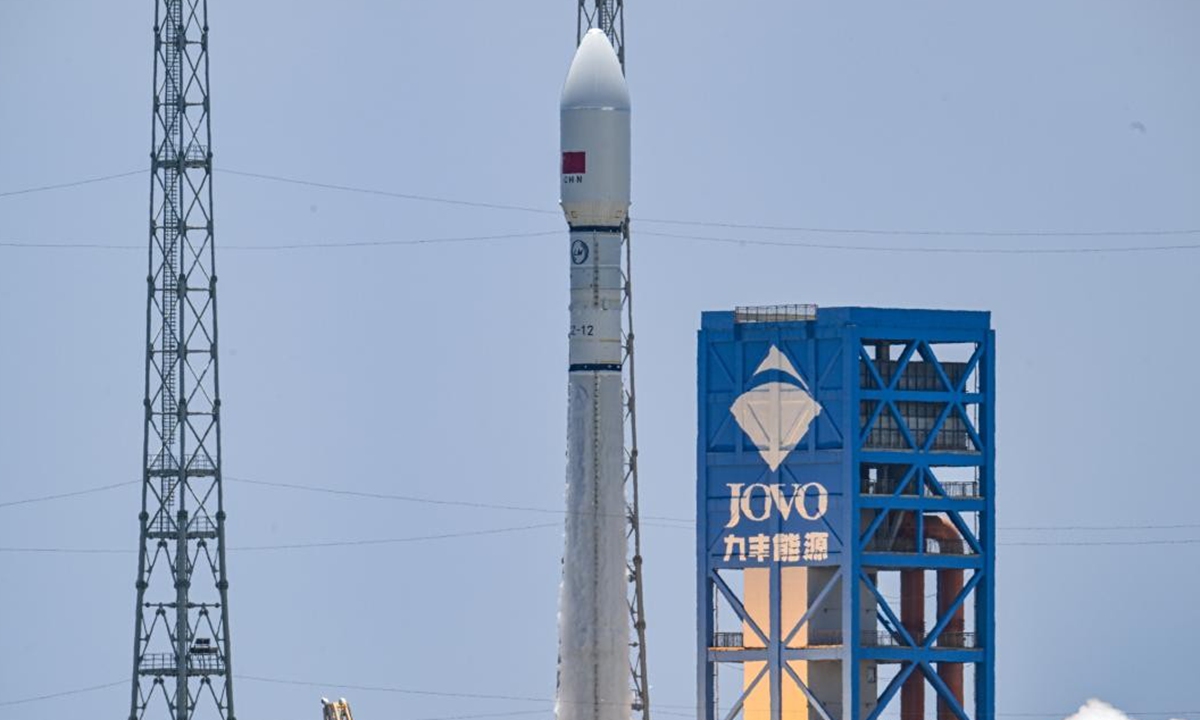
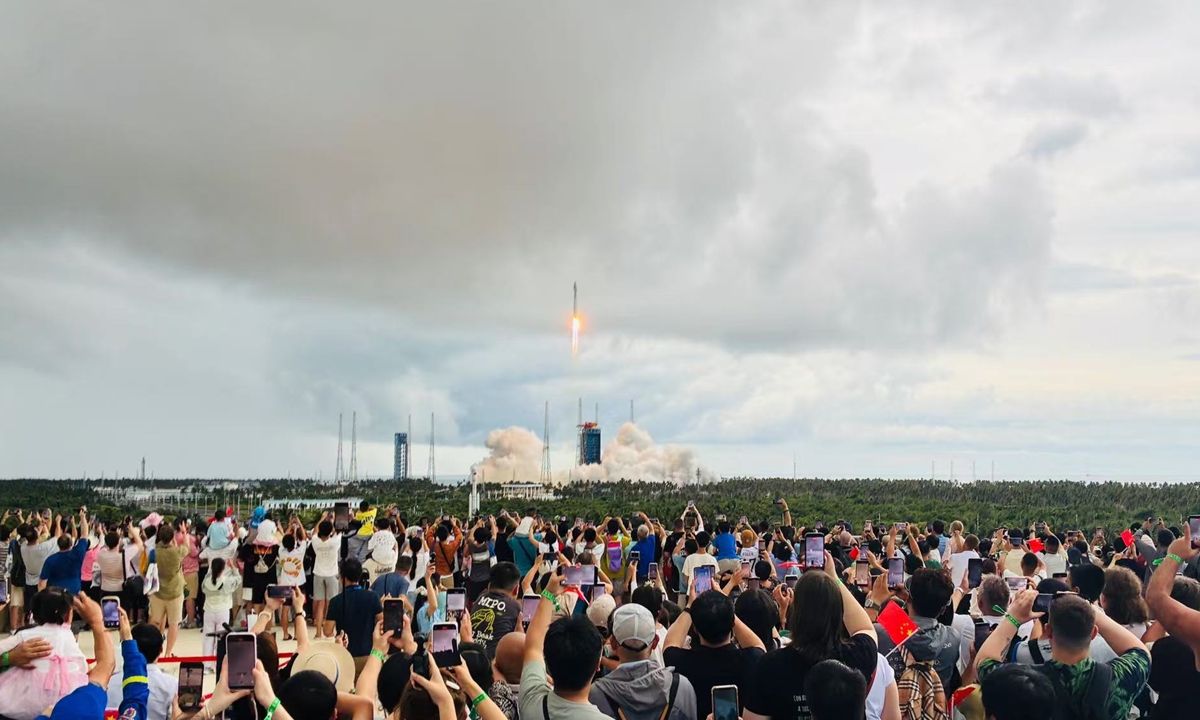
Two successful launches among China's recent frequent moves caught particular attention of space watchers - the 24th group of low-Earth orbit internet (LEO) satellites aboard a Long March-12 rocket was sent from a commercial spacecraft launch site in the southern island province of Hainan on Sunday, 12 days after the 23rd group of LEO satellites aboard a Long March-8A rocket was launched from the same Hainan site on August 4.
Sunday's mission marked the 663rd launch of the Long March series of carrier rockets, which on Monday sent an SEO satellite into preset orbit, per Xinhua.
Experts said the launches of two groups of LEO satellites within 12 days underlined that China is notably accelerating its pace of building its satellite internet constellation.
"The launch of LEO satellites has now entered a regular and cyclical rhythm, with batches of satellites continuously being sent into orbit at relatively stable intervals," Kang Guohua, a senior member of the Chinese Society of Astronautics and a professor of Aerospace Engineering at Nanjing University of Aeronautics and Astronautics, told the Global Times on Monday.
China launched the first group of LEO internet satellites on December 16, 2024, proceeding to the 24th batch in about 20 months. Kang said three major production and launch "assembly lines" are supporting the effort: satellite factories featuring centralized design in Beijing, coordinated supply chains and mass production; rockets with streamlined launch and testing procedures and multiple configurations; and launch sites capable of supporting routine constellation deployment.
The Long March-12, which played a key role in the latest LEO satellite launch, is China's first 4-meter-class single-core-stage carrier rocket and was specifically developed for commercial launch needs. It is about 62.6 meters long, has a liftoff mass of 430 tons and can carry more than 12 tons to low-Earth orbit. Its first stage is equipped with four 1,250-kilonewton pump-fed liquid oxygen-kerosene engines and uses a newly developed coal-based aerospace kerosene, according to Shanghai Academy of Spaceflight Technology.
The rocket adopts a "three-horizontal" launch preparation model: horizontal assembly, horizontal testing and horizontal transportation. Depending on mission requirements, it can use fairings with diameters of 4.2 or 5.2 meters and support both single-satellite and multi-satellite launches into different orbits.
"This flexibility makes the Long March-12 particularly suitable for the 'one rocket, multiple satellites' model required for constellation deployment, making it one of the main launch vehicles currently used for LEO constellation missions," Kang said.
The mission also highlighted the launch site's growing ability to support high-frequency launches. The rocket took only two and a half days from being transported to the launch area to liftoff, setting a record for the shortest time a rocket occupied the launch position at the site, Kang said.
Despite the rapid progress, experts cautioned that the 228 satellites currently in orbit remain some distance from the ultimate goal. China's satellite internet project has a long-term goal of deploying nearly 8,000 satellites and is now in an accelerated "weaving" phase.
China's advantage lies in its ability to control costs and boost production efficiency once satellite manufacturing reaches mass-production scale, another expert surnamed Liu told the Global Times.
"Whether it is the production capacity of AI centers or the factory in Hainan, which has an annual satellite manufacturing capacity of 1,000 units, satellite production itself is not the problem," Liu said. "More bottlenecks lie in the operational efficiency of launch pads and the rocket payload and recovery technology."
The real challenge lies in rocket reusability. Only by lowering launch costs and increasing launch frequency can China sustain a pace of more than one launch per week. This is also the strategic significance of accelerating the development of reusable rocket technology, including the Long March-10B and privately developed rockets, Kang further noted.
Chinese Academy of Engineering academician Deng Zhongliang previously said in an interview that satellite internet will serve as an indispensable space-time infrastructure for 6G, enabling emerging industries worth trillions of yuan, including the low-altitude economy, advanced autonomous driving and the Internet of Things (IoT).
。 应国家主席习近平邀请,约旦哈希姆王国国王阿卜杜拉二世于8月18日至24日对中国进行国事访问。此次访问是阿卜杜拉二世国王登基以来第九次访华。他曾表示,自己自青年时代起多次访华,对中国充满感情。两国元首将如何引领中约战略伙伴关系迈上新台阶?跟着“大国外交最前线”一起去现场看看吧! 总监制丨申勇 监制丨龚雪辉 策划丨史伟 王鹏飞 彭汉明 编导丨黄茜 杨紫童 摄像丨范凯 范学禹 海报丨陈括 【编辑:徐世傲】。
Current article:http://www.senchuoshaozaodidia.shop/zmr/q9fmp.html
Published on:03:35:35
相关新闻
- 北京地铁再通报“5号线一列车车辆故障”:已处置完毕,运营秩序正逐步恢复
- 【品种策略】铜:08月26日多家期货公司晨报观点汇总
- 北京G4淘汰北控,赛后迎四好消息!2将拾巅峰,曾凡博三分蜕变!
- Hrishikesh Mukherjee's best films
- 联想柔性折叠屏Windows 10设备专利曝光
- 李대통령 지지율 30%대로 추락…취임 후 최저치
- 华为余承东:智界 V9 汽车 7 月高端 MPV 市场零售占有率达到 68%
- Asking a PU schoolgirl to take off her hijab at her school gate, is an invasion on her privacy: Justice Dhulia
- China's first marriage registration office inside a bank opens in Tianjin as couples increasingly say 'I do' at scenic spots, theme parks and music festivals
- 热点快评丨 一间小屋,呵护城市中的奔跑者
最后更新
- 最新进展:直升机具体位置已确定!伊朗外交部凌晨发布声明!
- 詹姆斯打造梦幻YouTube高尔夫频道团队:我选韦德乐福JR·史密斯
- 海南州:打造“新能源+算力”双向赋能特色产业集群
- 第十届广州老博会闭幕 达成意向合作金额超7.6亿元,第十届广州老博会闭幕 达成意向合作金额超7.6亿元
- 《影之刃零》Steam预估销量爆炸!达《黑神话:悟空》同期73%
- BANGLADESH PROPHET MUHAMMAD BIRTHDAY
- 不仅Z9G和A9G电视:索尼将在2019年推出更多新产品
- 西藏波密开展红色课堂进校园活动 厚植师生爱国情怀
- Canonical发布Ubuntu Linux 22.10 "Kinetic Kudu"
- 《Intergalactic: The Heretic Prophet》卡司阵容扩充,迎来《UNCHARTED™: 盗贼传奇合辑》与《最后生还者:第一部》资深成员加盟
热门新闻
- NS2全球涨价计划完成!最后拼图补全 诚挚致歉
- 劲!《GTA6》女郎比前代润太多:这下必须天天去了
- 第五人格IVL:FPX.ZQ_DongX灵性操作天神下凡,鹿头四抓奠定优势
- 比亚迪 × 荣耀达成深度手车互联合作,地址流转一拖即达、音乐无缝流转
- 庆祝游戏25周年:推出XBOX周边、全新社区设计、FanFest巡回活动日期及更多内容
- Apple reportedly tests CXMT chips, showing China-US industrial chain cooperation ‘irreversible’: experts
- 台风“白海豚”最新动态 对杭州风雨影响有调整
- 【研报观点】8月26日沪锡最新观点汇总
- 【异动】硅铁一看空商品期权合约大涨88%
- 名记曝活塞与杜伦续约谈判已陷入高度紧张状态